
Getting someone out: $80–$180
Standard Sydney call-out for after-hours attendance. Ask before booking, not after the invoice.
Genuine round-the-clock cover across Bondi Beach. You get an honest ETA rather than a flattering one, a fixed price before work starts, and on the calls that can safely wait, you get told that too.
Most of the value in an emergency call happens before anyone arrives. Knowing to shut the water off at the meter, knowing not to touch a light switch when there is a smell of gas, knowing to kill the power to a soaked area: each of those is worth more than the hour we save on the road.
So the call starts with instructions rather than a booking form. Then a crew is dispatched with the common failure points already on the van, because diagnosing from scratch at midnight is how a two-hour job becomes a two-visit one.

Salt air and salt-laden groundwater eat galvanised and cast-iron lines from both sides. Interiors go rough and flaky, waste snags on them, and eventually the pipe gives way altogether.
Salt air shortens the life of everything metal on the outside of a house: tap spindles, external copper, hot water casings and the fixings holding them up. It is slow and even rather than dramatic, which is exactly why it tends to be noticed all at once.
The emergency version is usually an external fitting letting go. Isolating at the meter stops it immediately, and the replacement should be specified for the environment rather than like-for-like.
If the fault turns out to need digging, loose ground changes the job: trench walls do not hold, so a hole that would stand unaided elsewhere needs shoring, and that is not after-hours work.
What tonight can do is clear, camera and make safe. Anything structural gets scoped properly in daylight, and we would rather say that than start something at 11pm that cannot be finished safely.
The slowest part of an apartment emergency is often not the plumbing — it is the door. Fob access, a basement that needs a resident to open it, a car park with no after-hours entry: any of those can add half an hour while water is still running.
In a walk-up, every kitchen and bathroom shares a stack. One flat putting fat or wipes down it backs up the whole line, and the ground-floor unit wears it first.
Two things worth doing before you ever need them: find your lot's isolation valve — usually in the laundry or a hallway cupboard — and save the building manager's after-hours number in your phone. Both take five minutes on a calm evening and both save real time on a bad one.
Bondi Beach (postcode 2026) runs from Campbell Parade back up the hill toward Bondi and North Bondi, with Tamarama around the headland. Dense apartment blocks over original semis and terraces, constant salt air and sand in everything give it a drainage profile you won’t find further inland.
On sloping ground the problem is rarely where the symptom is. Water leaves a failure at the highest point and surfaces at the lowest, which can be several properties away and well downhill of anything you would think to look at.
It is also why a neighbour's overflowing gully is sometimes your blocked line, and occasionally the reverse. We work uphill from the symptom rather than digging where the water appears.
A tank or heat pump mounted where it copes with salt-laden air works harder for its life than the same unit further inland. Casings corrode, the sacrificial anode goes sooner than the manual suggests, and failure arrives earlier than the warranty implies.
A leaking tank under pressure is not something to open up. Shut its cold-water isolation valve if you can reach it safely, and leave the rest to the visit.
Sand travels a long way from the beach and washes into any cracked pipe or open joint, where it compacts into plugs that rodding pushes around rather than removes.
Fine sand washes and blows into stormwater pits and lines and settles wherever the flow slows. Clearing it restores the drain the same day, which is genuinely useful, and it does not stop more arriving next season.
The question worth asking after the emergency is whether the line has a low point holding it. Sand collecting evenly is maintenance; sand collecting at one spot every time is a gradient problem.
Standard Sydney call-out for after-hours attendance. Ask before booking, not after the invoice.
Roughly $120–$160 in daylight. Someone is out of bed and on the road, and the rate reflects it.
Where most single-fault after-hours jobs land once attendance, labour and small parts are counted.
Slab leaks, gas line work, anything that means opening a wall overnight. You approve the figure first.
We would rather book you for Monday at daylight rates than take a premium for a job that was never urgent.
These are market ranges, not our quote. You hear your number first and decide with it in front of you. Figures here are indicative of the 2026 Sydney market rather than a quote from us, you get your own number as a fixed price before any work starts.

Before any booking, the person on the phone tells you what to isolate. That call is where most of the damage is either prevented or done.
You are told when someone can actually be there, not a number designed to keep you on the line. If that is ninety minutes, it is ninety minutes.
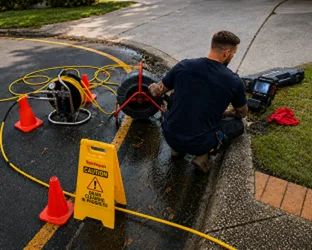
Stop the water, make the area safe, find the cause. Only then does a price get put in front of you, and nothing starts until you have agreed it.

Finished on the night wherever the parts allow. Where they do not, you are left watertight and usable, with the return booked before we leave.
Describe what it is doing and we will tell you honestly whether it needs a van now or costs less on Monday.
Ring us and a plumber picks up. Leave details instead and you will get a callback with an ETA, not a sales call.

Leave your details and our local Bondi Beach team will call you back fast.